Co-Optimization of Structure and Manufacturable Semi-Continuous Layers for Laminated Composites
The University of Manchester/ Digital Manufacture Lab
Video
Abstract
Method Overview
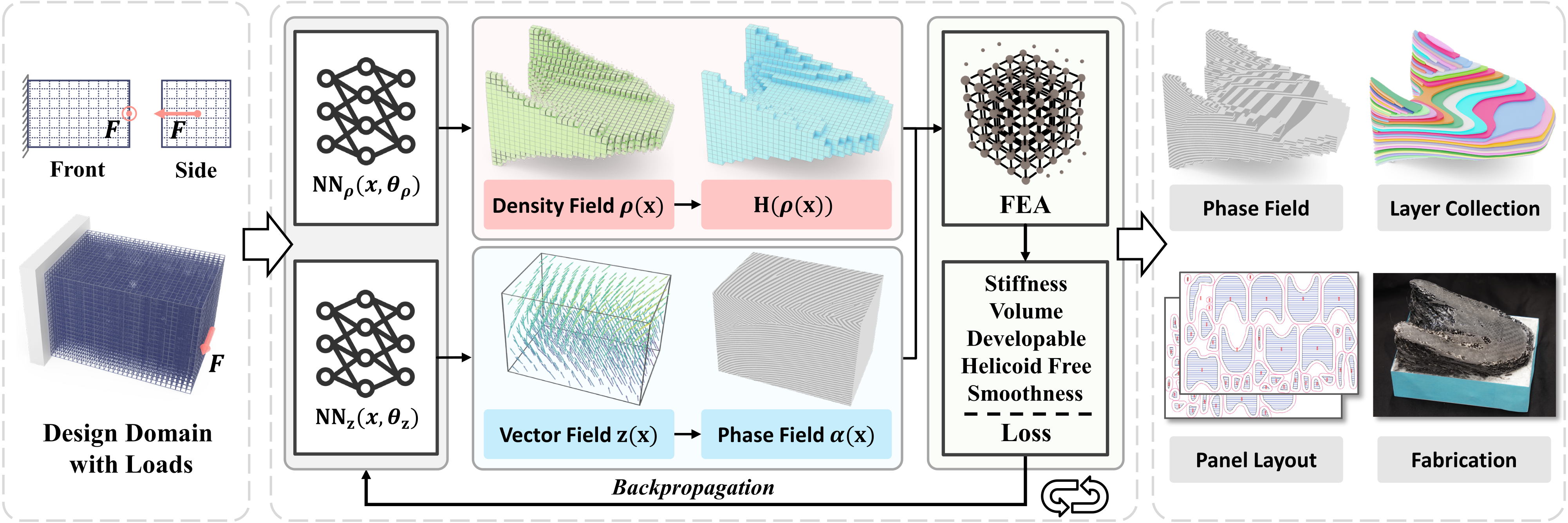
Computational pipeline of the proposed framework. Two continuous fields -- a density field and a vector field -- are parameterized by neural networks (NN) and jointly optimized in a self-learning loop via backpropagation. Mechanical performance is evaluated through FEA, while manufacturability is enforced using geometry-based loss terms. The optimized fields are then used to extract a collection of curved semi-continuous layers, which are flattened into planar panel layouts for the fabrication of laminated composites.
Results
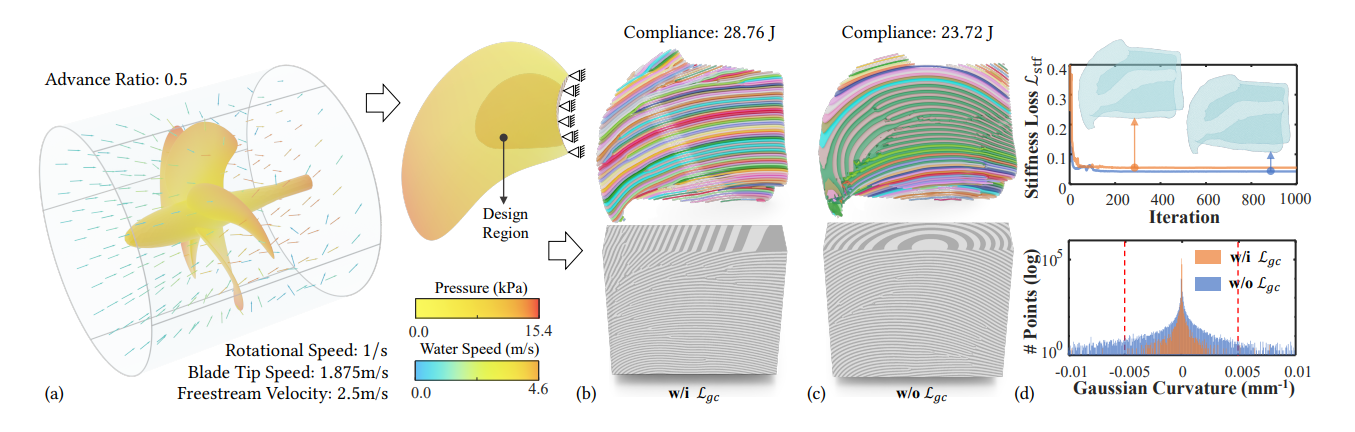
Co-optimization results for the interior core structure of a laminated-composite propeller: (a) loading conditions and design domain of the propeller, (b) optimized interior structure and curved semi-continuous layers generated by our approach, (c) the ablation study result obtained by disabling the Gaussian curvature loss Lgc, i.e., using ωgc = 0.0, and (d) convergence curves of the stiffness loss Lstf and histograms of Gaussian curvature for cases with and without the Lgc loss.
Results
Overview Figure
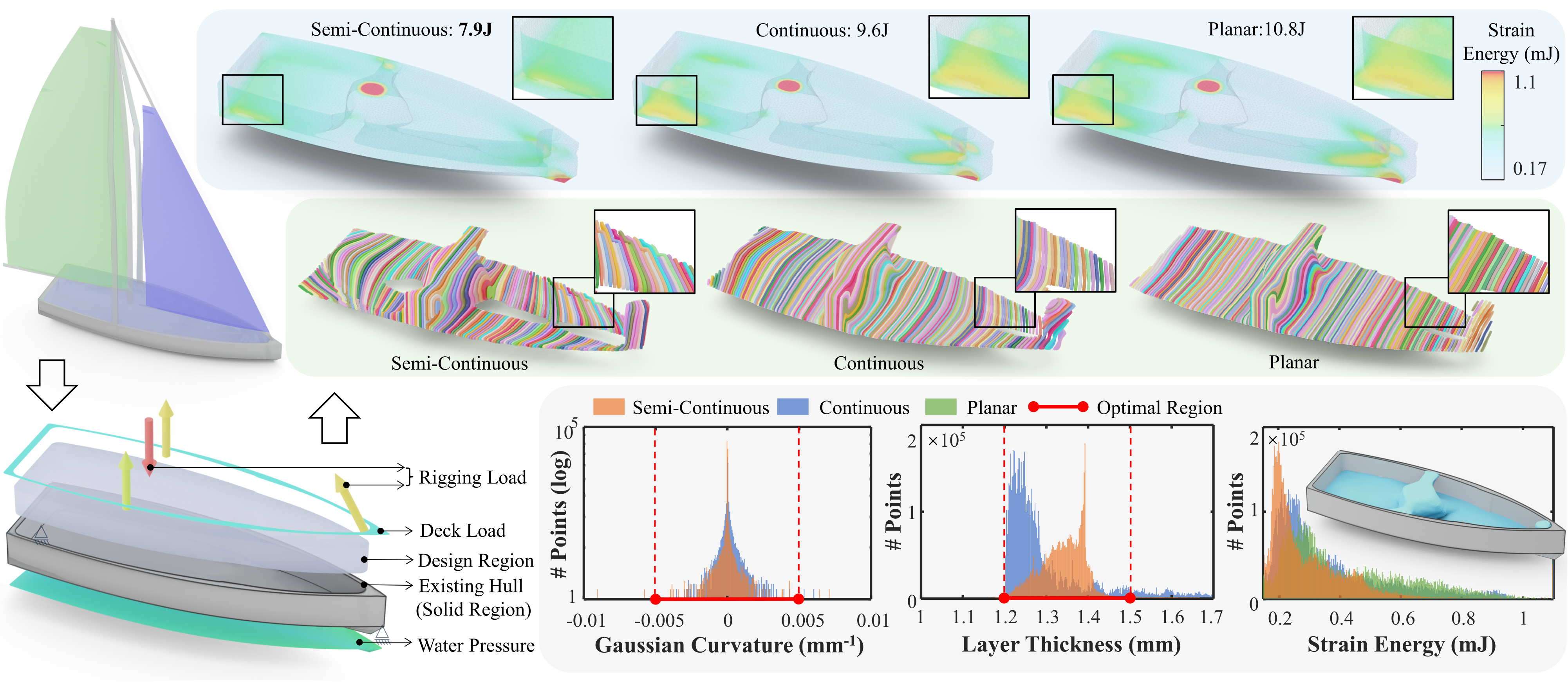
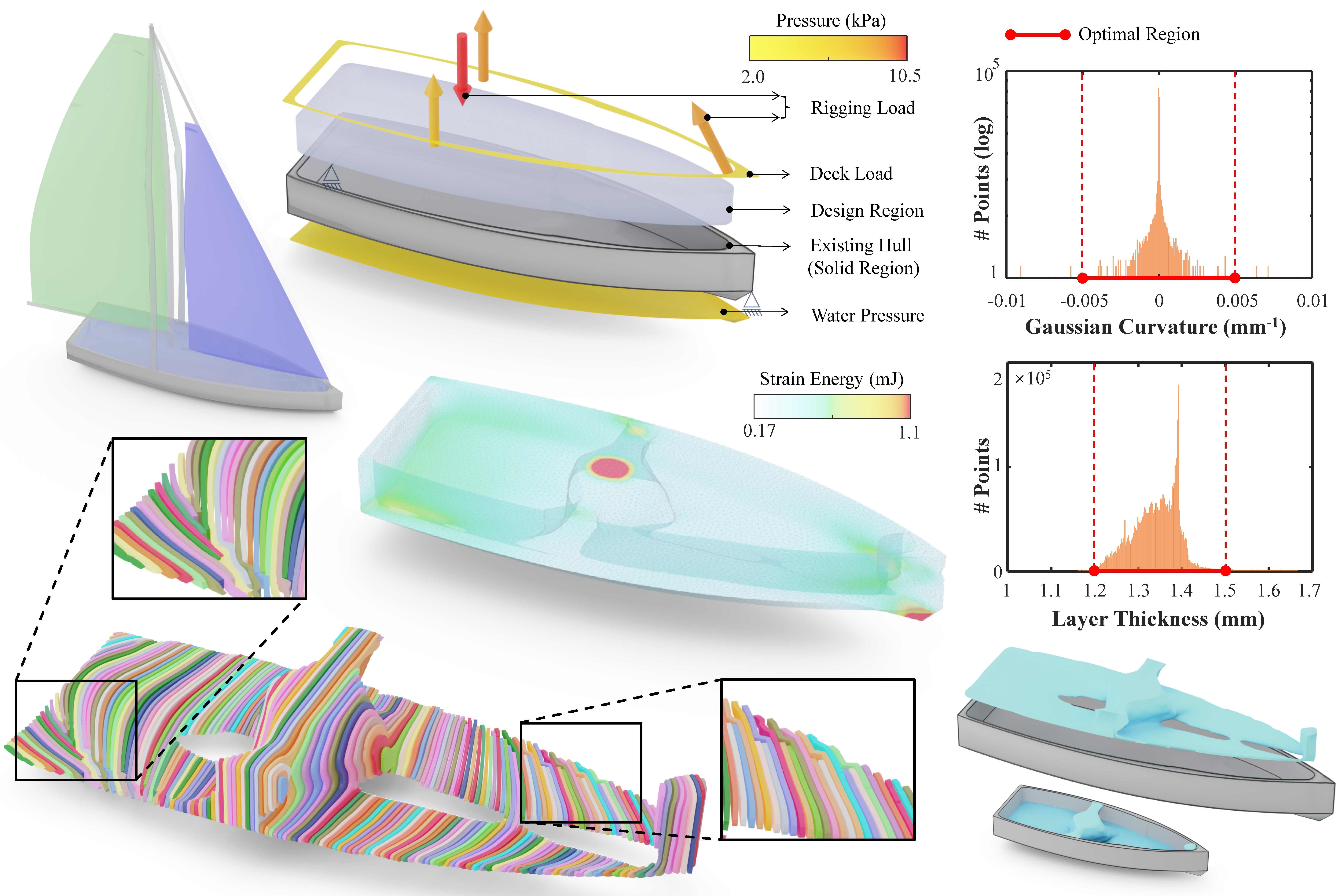
Co-optimized topology and curved semi-continuous layers for a woven fabric–reinforced laminated composite boat structure, resulting in improved mechanical performance and enhanced manufacturability with well-controlled Gaussian curvature and layer thickness.
Fabrication / Validation
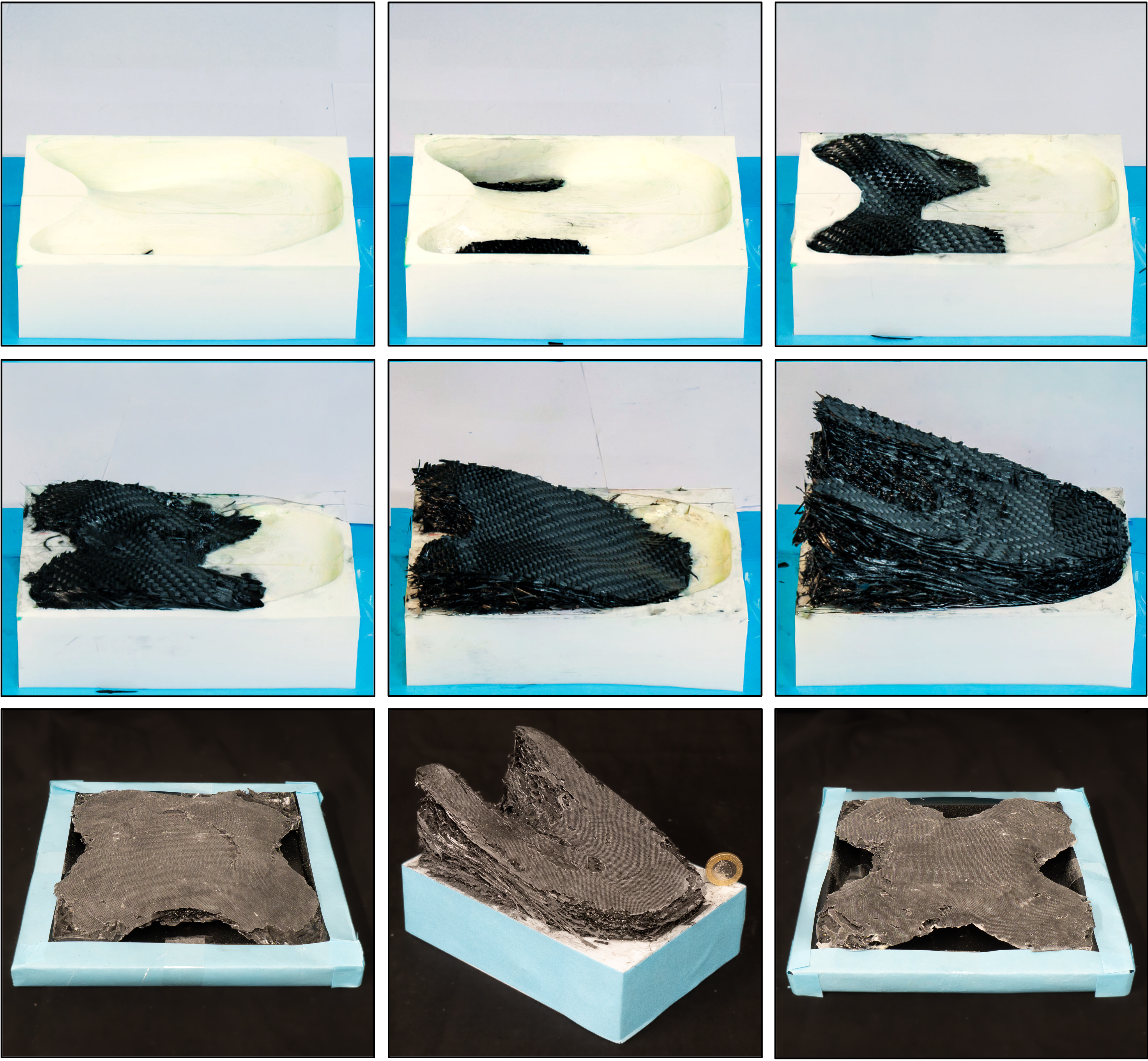
The fabrication of laminated composites are taken on 3D printed moulds -- see an example of fabrication sequence, and all the physically fabricated models.
Tensile Test
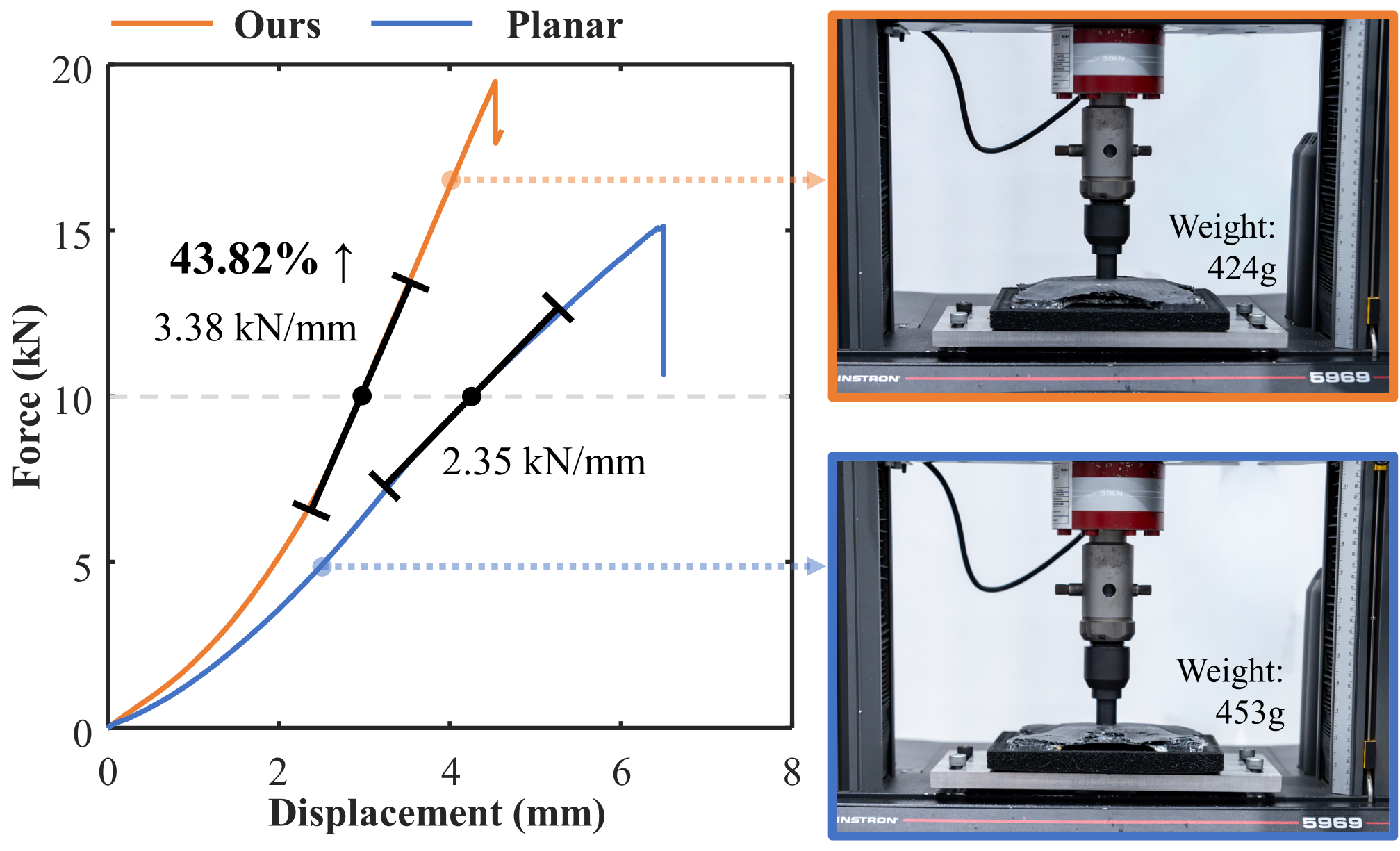
Tensile test results for the Shell model. Specimens fabricated using our curved semi-continuous layers and the conventional planar & parallel layers are tested under compression.
BibTeX
@article{LIU2026cooptimization,
  title   = {Co-Optimization of Structure and Manufacturable Semi-Continuous Layers for Laminated Composites},
  author  = {TAO LIU, AORAN LYU, YONGXUE CHEN, YU JIANG, MICHAEL PETTY,and CHARLIE C.L. WANG},
  journal = {ACM Transactions on Graphics},
  year    = {2026}
}